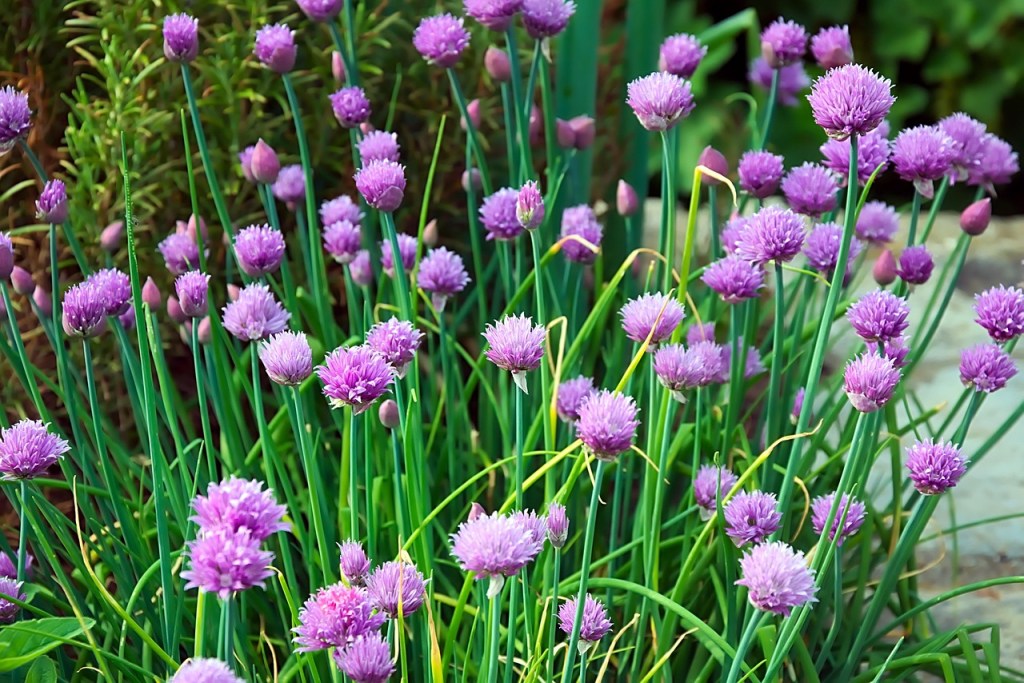
Rich in vitamins A and C, chives are a member of the onion family. Indeed, their flavor is reminiscent of onion, but more delicate because they contain less sulfur. When finely snipped, their bright green color makes them an attractive as well as flavorful addition to dishes. They are one of the classic fines herbes along with parsley, tarragon, and chervil, and they marry well with egg dishes, like omelets, and with egg-based sauces. Long cooking diminishes their flavor, so it is best to add them to dishes at the last minute. Chive flowers can be sprinkled into salads for added eye-appeal and flavor. A handful of chopped chives is the perfect finish for just about any salad, soup, or sauce, adding to the taste as well as the presentation.
Other Names – Onion chives
Forms – Stems: Fresh, chopped, freeze-dried, and frozen; Flowers: Fresh, in season
Works Well With – Parsley, tarragon, and chervil

Tastes Good With/In – Stems: Eggs, salads, cream cheese, sauces, soups. Flowers: Salads
How To Store – Stems: Refrigerate in an airtight container or freeze in ice cube tray.
How To Dry – Suspend from heads on wire mesh for use in arrangements or as garnish.
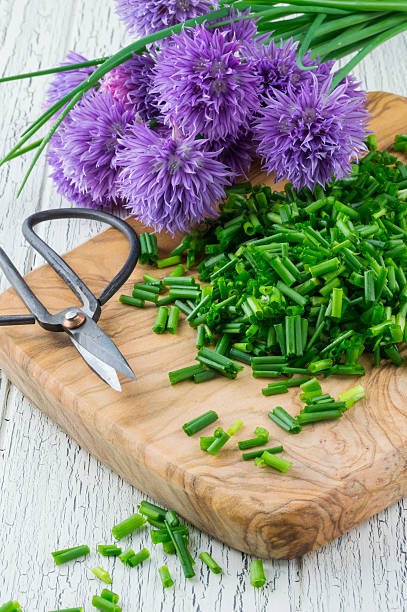
Cooking Tips – Add at the last minute because long cooking destroys their flavor. For chopping stems, a pair of scissors is the best tool. Use flowers for salads and garnishes.
Favorite Recipe
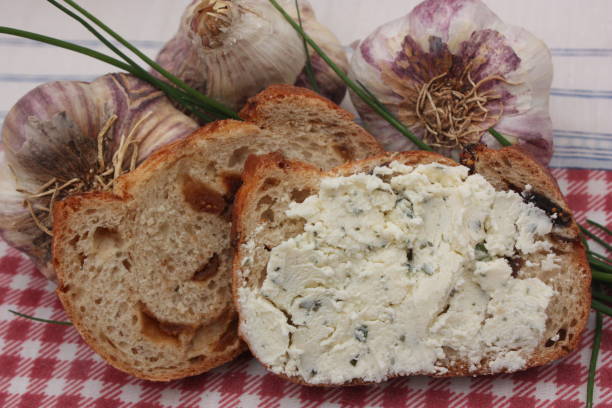
Chives and Garlic Spread
Serves 2-3
- 1/2 cup (125 g) low fat cream cheese, softened
- 2 tablespoons mayo
- 1 garlic clove, crushed
- 2 tablespoons fresh snipped chives or 1 tablespoon freeze-dried chives, cut
- salt and pepper
In a bowl, wish together the cheese, mayo, garlic, and chives. Add salt and pepper to taste. Scrape into a serving bowl and smooth the surface with the back of a spoon. Refrigerate for at least 30 minutes before serving. Great with crackers or bread.
In The Garden
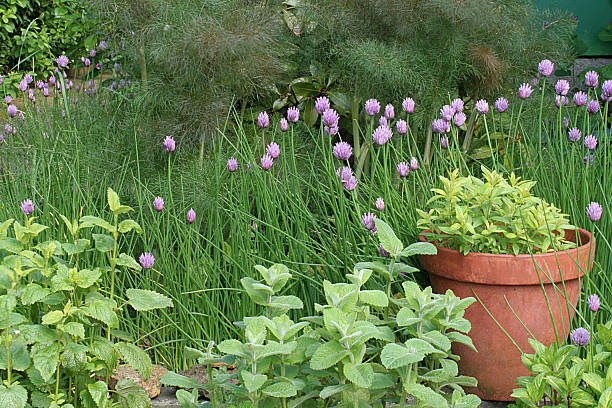
Chives like plenty of sun, well-drained soil, and decent moisture. It’s a good idea to dig in 4 to 6 inches of well-decomposed compost to the soil before planting. Because of their clump-forming habit, chives can become easily overcrowded, so dividing the clumps every 3 to 4 years will help to ensure growth remains vigorous.
Chives reseed itself, so be careful when weeding in the spring. In cold areas, the plant will disappear in late fall and reappear in early spring. In warm area, it will be an evergreen in your garden.
Use chives in beds with other herbs and flowers. Its bright green stems blend well in any planting. It’s also beautiful in pots.








 Sage Hill Botanicals
Leave a comment